
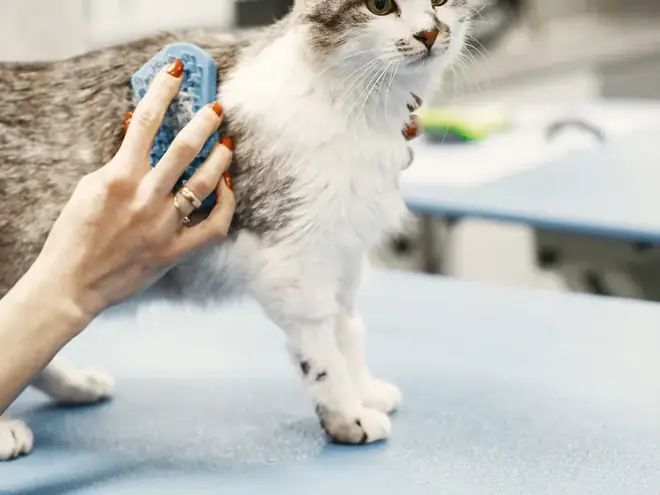
Every Dubai pet owner knows the feeling: you vacuum on Friday and by Sunday the sofa looks untouched by the effort. Shedding here is not a season, it is a permanent condition — and understanding why is the first step to controlling it.
The air conditioning problem
Coat cycles are driven by light and temperature. A pet that moves between a 24-degree apartment and 42-degree outdoors, with artificial light most of the day, receives contradictory signals. The coat never commits to a full moult and never fully settles. The result is continuous, moderate shedding all year instead of two concentrated moults.
Brushing is not de-shedding
This is the single biggest misunderstanding. A normal brush lifts loose hair from the topcoat — the visible fur on the surface. Shedding comes from the undercoat, the dense, softer layer underneath, and most household brushes never reach it.
A proper de-shedding treatment works in stages: a high-velocity dryer blows loose undercoat out of the coat while it is dry, a de-shedding shampoo and conditioner loosen what remains during the bath, and an undercoat rake removes the rest during the finishing brush-out. A single professional session removes more undercoat than months of home brushing.
Never shave a double coat
In Dubai’s heat it is tempting to shave a Husky, German Shepherd or Golden Retriever to the skin. Do not. A double coat is insulation that works in both directions — it keeps heat out as well as in. Shaving it removes the pet’s own cooling system, exposes skin to genuine sunburn risk, and the guard hairs often grow back patchy or never fully return.
The correct approach for a double coat in summer is aggressive de-shedding, not clipping. Remove the dead undercoat and air moves through the coat properly again.
Which pets need it most
Double-coated dogs — Huskies, Malamutes, German Shepherds, Golden Retrievers, Pomeranians — are the heaviest shedders. Among cats, Maine Coons, Ragdolls and Persians produce the most undercoat. Short-haired breeds shed too; the hairs are simply shorter and harder to see, which is why they work their way so effectively into fabric.
A schedule that actually works
For heavy shedders, a professional de-shedding treatment every 6 to 8 weeks makes a visible difference to the amount of fur in your home. For moderate shedders, every 8 to 12 weeks is usually enough. In between, brush two or three times a week with an undercoat rake rather than a slicker brush.
What else affects shedding
Diet matters. A coat short on omega-3 and omega-6 sheds more and looks duller. So does hydration, which is easy to overlook in a climate where pets lose more moisture than owners expect. Sudden heavy shedding outside the normal pattern is worth a vet check — it can indicate stress, parasites or a thyroid issue.
You will never stop a pet shedding. You can move most of that fur from your furniture into the van, which is where it belongs.
Book the van for your pet
Mobile grooming across Dubai for dogs, cats, rabbits and birds — at your door, at a time that suits you.
Book Mobile Grooming